Looking back at the extraordinary life and career of Arnold Palmer, who died Sept. 25 at age 87.



Looking back at the extraordinary life and career of Arnold Palmer, who died Sept. 25 at age 87.
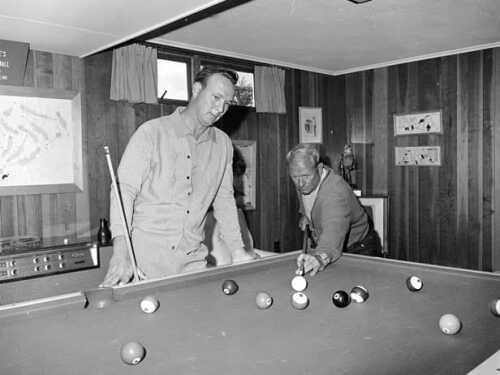
Arnold Palmer learned how to play golf from his father, Milfred “Deacon” Palmer, who was greenskeeper and head professional at Latrobe (Pa.) Country Club. “Pap” Palmer taught Arnold the Vardon grip when the boy was still a toddler, admonishing him to never change it.
Associated Press
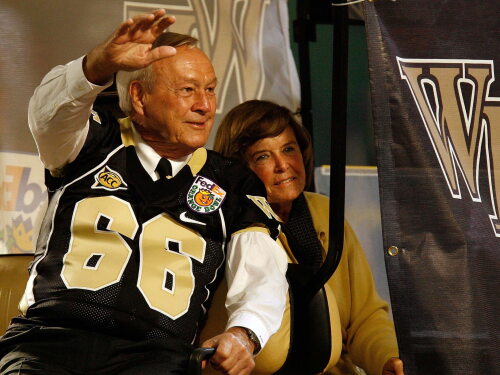
Palmer went to Wake Forest, where he became the individual medalist in the 1949 and 1950 NCAA Championships. He left school after the death of his close friend, Bud Worsham, who had been responsible for Palmer getting a golf scholarship. Palmer didn’t graduate, but he was awarded an honorary doctor of laws degree by Wake Forest in 1970.
Getty Images
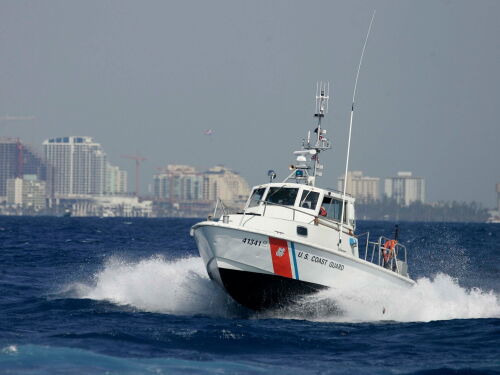
When Palmer left Wake Forest after the death of his close friend Bud Worsham in a car accident, he joined the Coast Guard, where he served for three years.
Getty Images
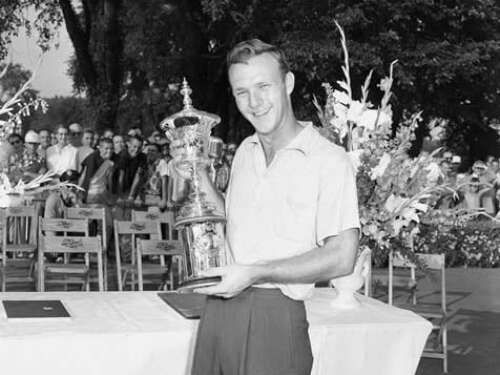
The 1954 U.S. Amateur final at the Country Club of Detroit was described by Sports Illustrated as a “battle of the classes” featuring “a graying millionaire playboy who is a celebrity on two continents” and a “tanned, muscular young salesman from Cleveland who literally grew up on a golf course.” Against Robert Sweeny Jr., Palmer didn’t have a lead until the 32nd hole, but he hung on for a 1-up victory.
Associated Press
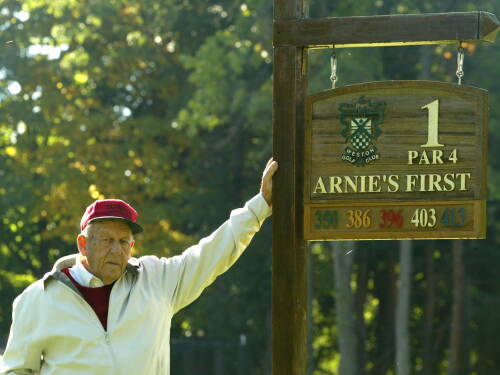
Palmer recorded his first PGA Tour win in his rookie season, 1955. He won the Canadian Open at Weston Golf & Country Club in Toronto, finishing four strokes clear of the field. His 23-under total remains the tournament record for low score in relation to par.
Getty Images
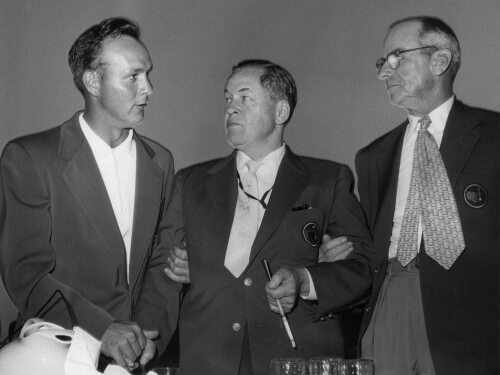
Palmer earned the first of his four Masters victories in 1958, finishing one stroke ahead of Doug Ford and Fred Hawkins. Key to Palmer’s victory was an embedded-ball ruling he received on the 12th hole in the final round. Initially denied relief, he played a second ball from the spot and appealed the ruling. His appeal was upheld, and instead of the double bogey he made with his first ball, he was able to count the par he made with his second.
Getty Images
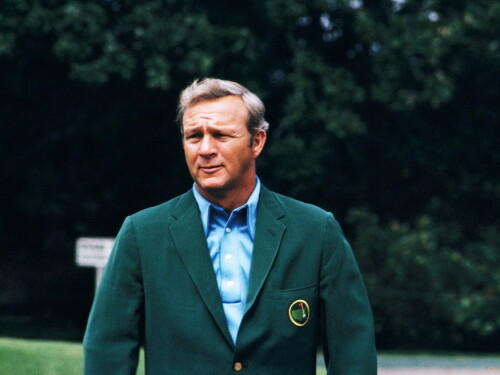
Palmer’s 1958 win at Augusta began a pattern of victories for him there. Between 1958 and 1964 he won every other year, four wins in all. He was close in the odd-numbered years as well, finishing third in 1959, T-2 in 1961, T-9 in 1963 and T-2 in 1965. He finished T-4 in 1966 and solo fourth in 1967, but he never had another top-10 there. Palmer’s four Masters titles tie him with Tiger Woods for second place all time, behind Jack Nicklaus’ six green jackets.
Getty Images
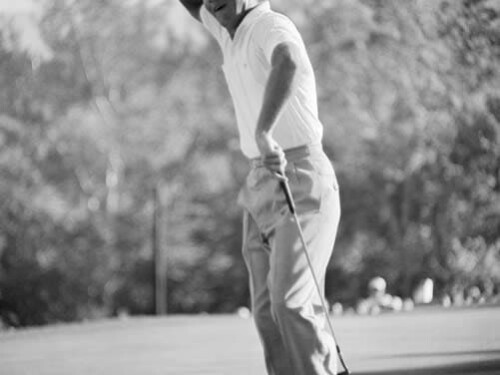
The legend of Palmer charging from behind was born in the 1960 U.S. Open at Cherry Hills in Colorado. Seven shots off the lead to start the final round, Palmer drove the green on the par-4 first hole on his way to a 65 and a two-shot win over Jack Nicklaus. It would be Palmer’s only U.S. Open title.
Associated Press
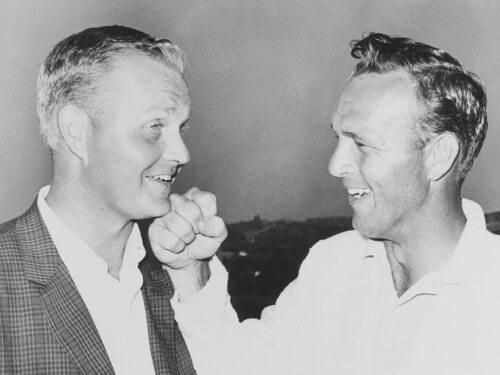
The 1962 U.S. Open was played at Oakmont, right in Palmer’s western Pennsylvania backyard. Fans flooded the course to watch their hero, who had won his third Masters that year, win another Open. There to serve as a foil for Palmer was Tour rookie Jack Nicklaus. But Nicklaus was far more than a foil. Despite ruthless heckling from the pro-Palmer crowd, the young Ohioan tied Palmer after 72 holes, then beat him in their 18-hole playoff, 71 to 74.
Getty Images
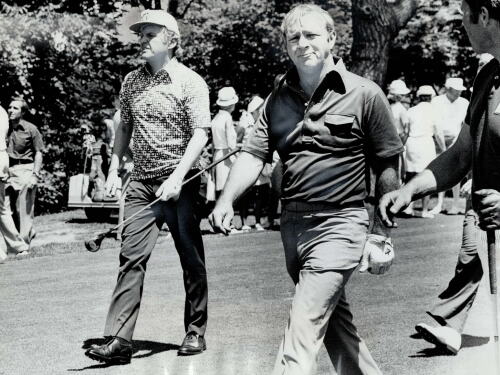
Mark McCormack (left) founded the International Management Group, which became arguably the most powerful sports agency in the world. His first client? Arnold Palmer.
Getty Images
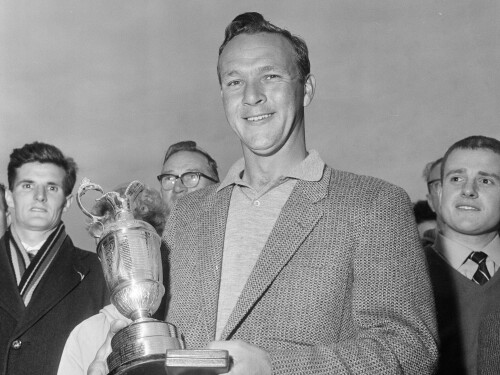
Palmer won the first two majors of 1960 and decided to play in The Open for the first time. He finished a stroke behind Australian Kel Nagle at St. Andrews, but came back the next year and won at Royal Birkdale. He then successfully defended that title, cruising to a six-shot win at Troon in 1962. Palmer’s participation is credited with persuading the top American pros to start playing in The Open.
Getty Images
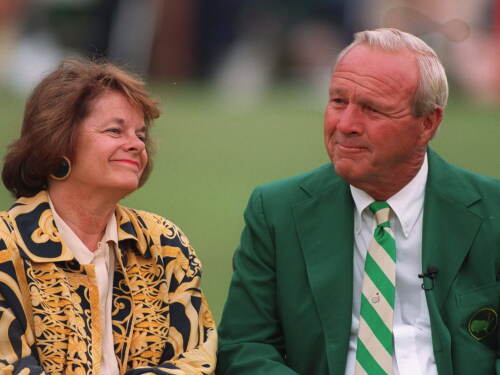
Palmer met Winifred “Winnie” Walzer after he won the U.S. Amateur in 1954. They were married that same year, and their marriage lasted 45 years, until her death in 1999.
Getty Images
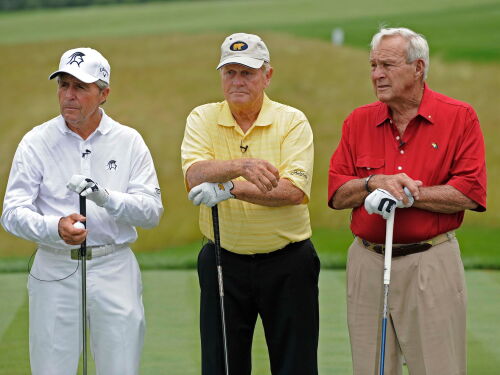
Palmer, Jack Nicklaus and Gary Player were dominant golfers in the early 1960s. They were also all clients of Mark McCormack, who originally christened them as “The Big Three,” an identity that has stuck with them throughout their careers.
Getty Images
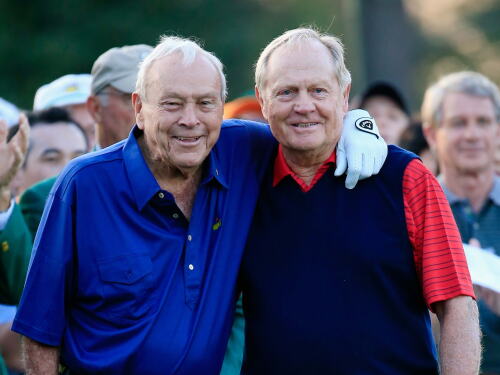
Their rivalry started in bitter fashion for Palmer, losing the 1962 U.S. Open to Nicklaus on home ground, but the two men parlayed a mutual respect into a lifelong friendship.
Getty Images
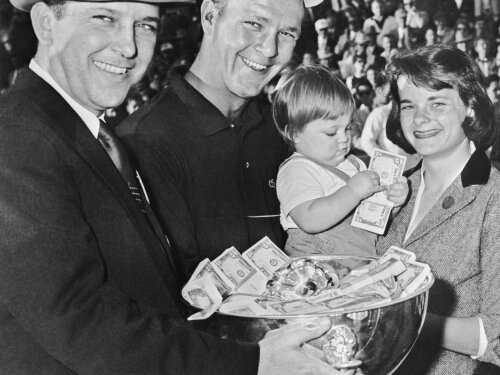
Palmer was the PGA Tour’s leading money winner in 1958, ’60, ’62 and ’63. With seven wins in 1963, he became the first golfer to surpass $100,000 in single-season earnings.
Getty Images

Palmer won the PGA of America’s Player of the Year award in 1960 and ’62. He was the leading money winner both years, and won the Vardon Trophy for low scoring average in 1962 as well. It was one of his four Vardon trophies (1961, ’62, ’64 and ’67).
Getty Images

Palmer’s 1960 season, in which he won the Masters and U.S. Open and was runner-up in The Open, led to him being recognized beyond the boundaries of golf. Sports Illustrated named him its Sportsman of the Year.
Getty Images
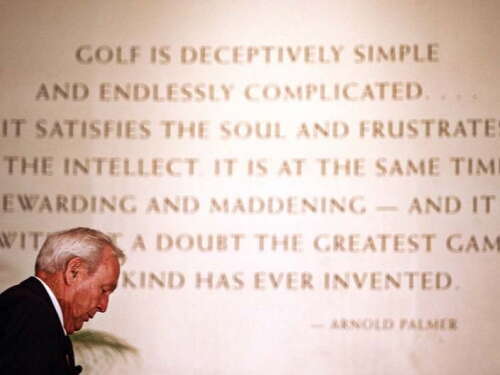
In 1974 Palmer became one of the 13 original inductees into the World Golf Hall of Fame.
Getty Images
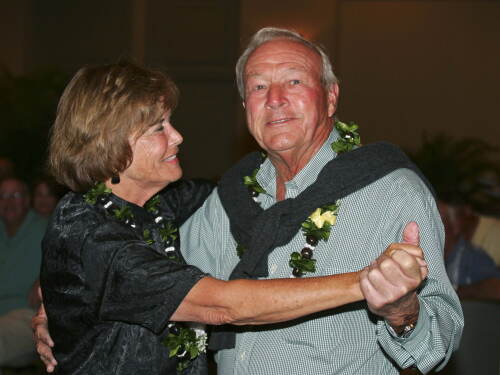
In 2005, six years after the death of his first wife, Winnie, Palmer married again. Palmer and Kathleen (Kit) Gawthrop were married on the beach in Oahu, Hawaii.
Getty Images
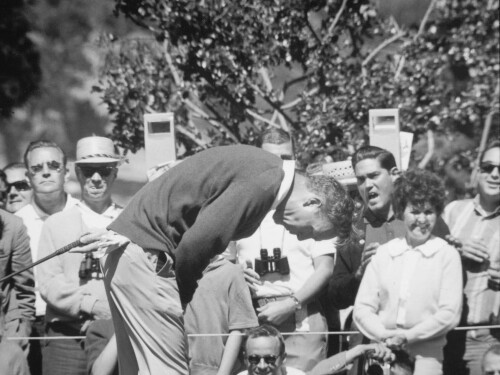
In a sport where expressing emotion is often viewed as a detriment, Palmer took the opposite approach. He was demonstrative with his reactions, and fans appreciated it. They exulted (or agonized) right along with him.
Getty Images
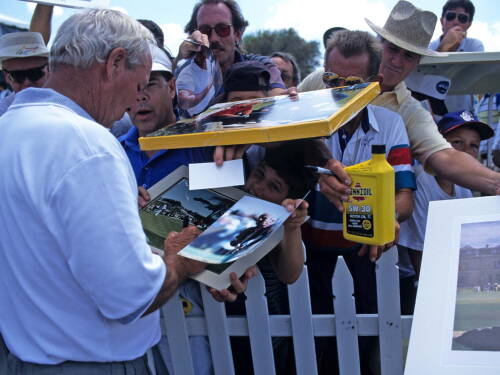
Corporate America loved Palmer, who endorsed Pennzoil motor oil, Hertz rental cars and Munsingwear golf shirts, among countless other products.
Getty Images
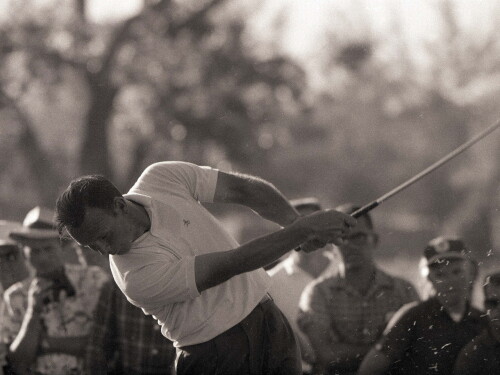
The hallmark of Palmer’s game was his willingness to take chances, which often led to spectacular recovery shots (or equally spectacular failures).
Getty Images

Palmer’s most agonizing defeat came in the 1966 U.S. Open at The Olympic Club. Seven shots ahead with nine holes to play, Palmer went ice cold at the same time that Billy Casper heated up. They tied at the end of regulation play, and Casper won the next day’s 18-hole playoff.
Getty Images
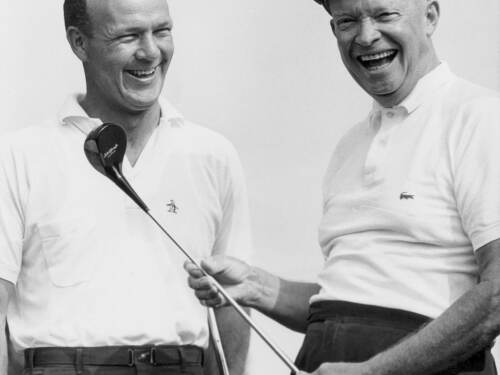
Palmer acquired a golfing buddy after he won the 1960 U.S. Open - former president Dwight D. Eisenhower. The two played dozens of times, often at Augusta National. Palmer’s friendship with Ike was the first in a long line of relationships he had with U.S. presidents.
Getty Images
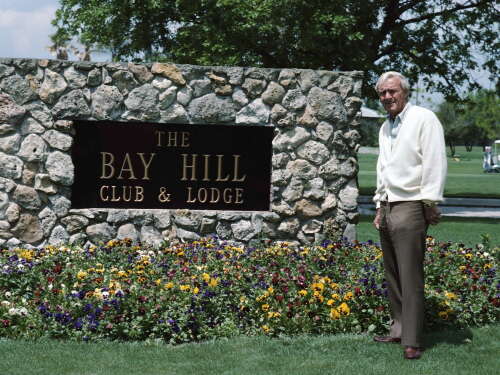
In 1974 Palmer purchased the Bay Hill Club & Lodge in Orlando, Fla., and in 1979 the course began hosting a PGA Tour event. In 2007 the tournament took on the name Arnold Palmer Invitational.
Getty Images
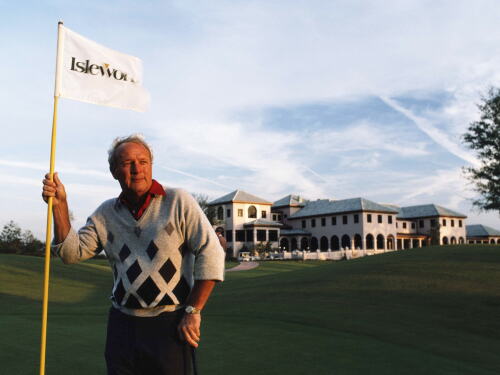
Palmer’s first venture into golf course design was the back nine at his home course, Latrobe Country Club in Pennsylvania in 1963. From that modest beginning, the Arnold Palmer Design Company grew into a global enterprise, with more than 300 courses worldwide to its credit
Getty Images
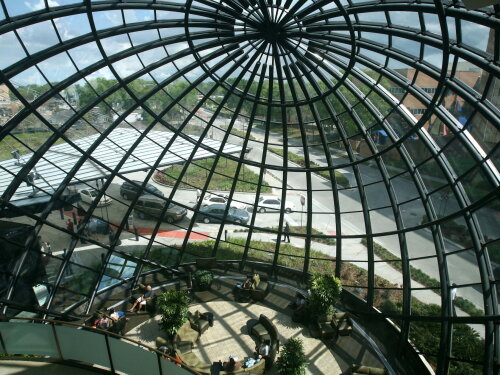
Palmer did extensive philanthropic work during his career. Two lasting legacies of that work are the Arnold Palmer Hospital for Children and the Winnie Palmer Hospital for Women and Babies, both in Orlando, Fla. (Pictured: the atrium at the Winnie Palmer Hospital.)
Getty Images
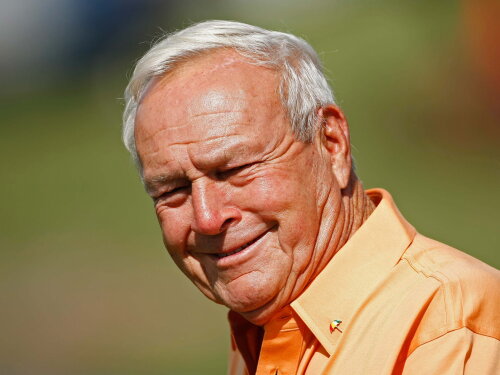
Palmer was eligible to play on the senior tour from its inception in 1980. He was the tour’s biggest name, and he wasn’t just a ceremonial presence, winning 10 senior events, including five majors, before he was done.
Getty Images

Alabama businessman Joe Gibbs had the idea to create a television channel devoted to golf. He needed someone from the golf world to be the face of the project and help attract investors. No one fit that bill better than Arnold Palmer.
Getty Images
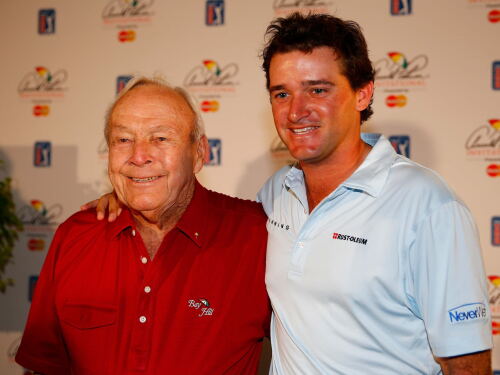
Palmer had no sons, but his family is represented on the PGA Tour by his grandson, Sam Saunders. Saunders is the son of Palmer’s younger daughter, Amy.
Getty Images
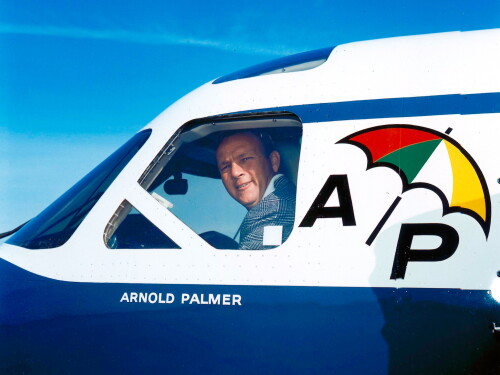
One of the first golfers to travel from tournament to tournament in a private plane, Palmer made a name for himself in aviation. In 1976 he was one of a crew of three who set a business jet record for an around-the-world flight in less than 58 hours.
Getty Images
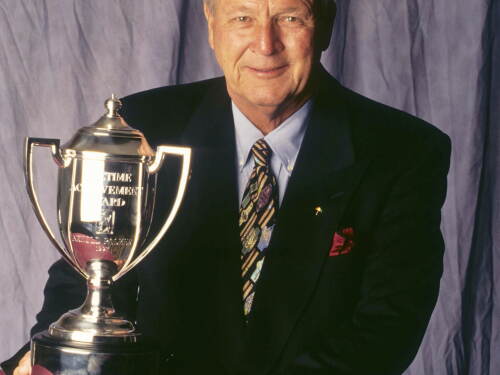
Palmer has received just about every lifetime achievement award in golf, including the USGA’s highest honor, the Bob Jones Award, in 1971; the Golf Course Superintendents Association of America’s Old Tom Morris Award in 1983; the PGA Tour Lifetime Achievement Award (pictured) in 1998 and the Tour’s Payne Stewart Award in 2000.
Getty Images
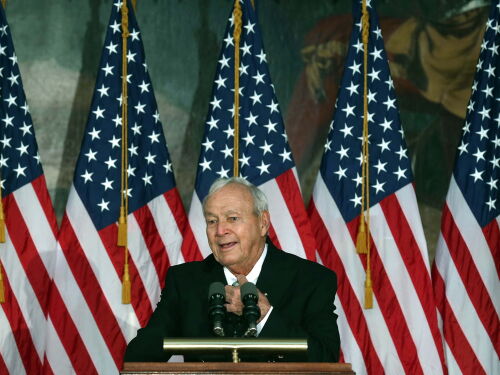
In 2004, Palmer became the first golfer to be awarded the Presidential Medal of Freedom, the nation’s highest civilian honor. In 2012 he became just the sixth athlete - and only the second golfer - to receive the Congressional Gold Medal.
Getty Images
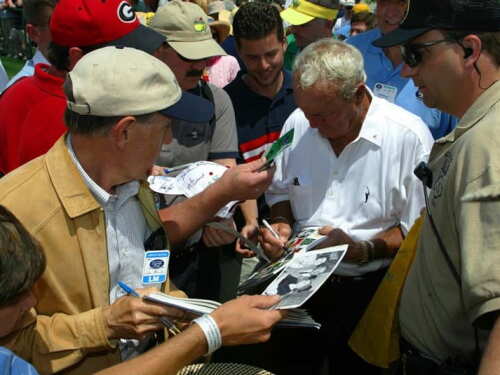
Palmer signed countless autographs over the years, always making sure his signature was legible. What’s the point of signing something if the person can’t read it or later can’t even remember who it was?” he once said.
Getty Images
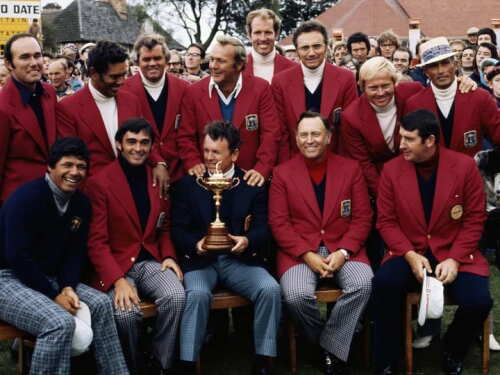
Palmer competed in six Ryder Cups, playing 11 singles matches and winning six. He is second on the all-time U.S. points list with 23, a half-point behind Billy Casper. Palmer and Gardner Dickinson are the all-time most successful U.S. partnership, having won all five of their matches. He was the last playing captain in 1963, and captained the team again in 1975.
Getty Images
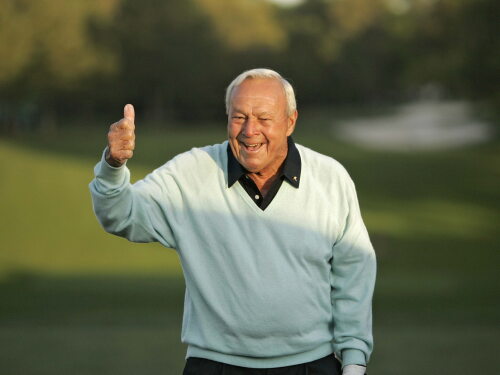
Add it all up - good looks, magnetic personality, power, finesse, approachability, kindness - and you have the King.
Getty Images