




The PGA Tour-LIV drama overshadows the on-course action, Tiger Woods enters the most painful stage of his career, Rory McIlroy rediscovers his love for the game and more in this year-end edition of Monday Scramble:
In this space 52 weeks ago, we never could have foreseen what would unfold at the top levels of the sport.
All of the tumult. The animosity. The infighting and about-faces and fabrications.
No matter what happens in 2023, it’s clear that the elite men’s professional game has been forever changed. Marquee names have been suspended by the PGA Tour. More money has flowed to players. And there is a distinct line that has been drawn between the haves and have-nots, the stars and the seat fillers.
Here are our biggest takeaways from what was BY FAR the biggest story of the year:

• LIV Golf has been good for the PGA Tour. Yes, it stings not to have Dustin Johnson, Cameron Smith and Bryson DeChambeau teeing it up in Tour events for the foreseeable future, but LIV’s disruption forced a steady but stale product to adapt. The best players are about to get generationally wealthy (if they aren’t already). A top-70 cutoff should lead to a more competitive and cutthroat conclusion to the regular season. And while next year’s schedule is a step in the right direction – elevated events with guaranteed top fields and $20 million purses, with the fall used solely for status qualifiers – 2024 should be even more streamlined as the Tour seeks to build on its strategic alliance with the DP World Tour. The Tour’s stated mission has been to create playing opportunities for its membership, but it’s simply bad business to treat Tiger Woods and Tyler Duncan the same. The Tour has finally begun catering to the biggest names, and that can only mean good things for the product in the future.
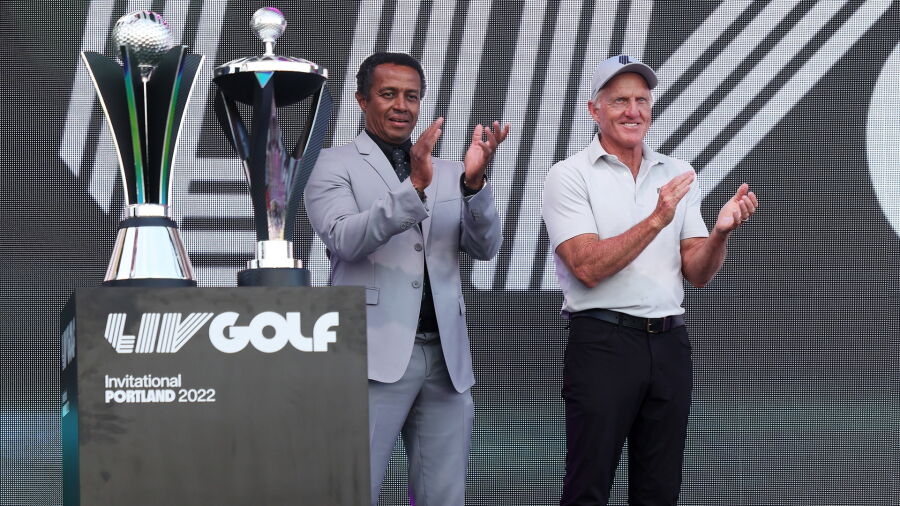
• LIV’s viability remains uncertain. The New York Times reported last week that LIV COO Atul Khosla resigned from his post following the conclusion of the inaugural season. Was it because of a power struggle at the top with lightning rod commissioner and CEO Greg Norman? Without a TV deal or corporate sponsorships, did Khosla not see a path to profitability? No official reason was given. But Khosla’s departure comes at a critical time for LIV, which is set to embark on its full league format in February. LIV officials have been adamant that 2022 was merely a soft launch, a beta test – and by that measure, sure, it was a resounding success. They’ve altered the pro landscape. The events appeared fresh and fun. And they’ve wooed key names with Saudi riches. But that alone isn’t enough. Zoom out a bit, and the picture is cloudier: Streaming audiences for LIV events were relatively meager; the circuit has not been awarded world-ranking points; sponsors have been reluctant to join what critics view as Saudi sportswashing; and it’s now embroiled in a contentious lawsuit with the Tour. Much remains undecided. At this point, there’s little reason to think LIV would consider a compromise with the Tour – they’re each going down their respective paths, both convinced they’ll be on the right side of history. But by this time next year, that calculus could change. If the events aren’t on TV … and if sponsors haven’t bought in … and if the OWGR makes an unfavorable ruling … it’ll have little choice but to fold into the established ecosystem.

• The majors haven’t yet announced their 2023 qualification criteria, but it’d be a surprise if they tried to keep out LIV players. As of now, 16 of the 78 players eligible for the Masters are aligned with LIV, including some high-profile past champions such as Phil Mickelson and Dustin Johnson. The Opens could (and probably should) continue to exempt the top 50-60 players based on the OWGR; by the time those events are played, the LIV defectors’ dormant OWGR will have suffered so dramatically that they’d need to go through open qualifying anyway. And the PGA’s imperative is to stage the greatest tournament it possibly can – why would they deliberately exclude talented players at the detriment of their own event? The majors should punt the issue and let the tours/courts hash it out.
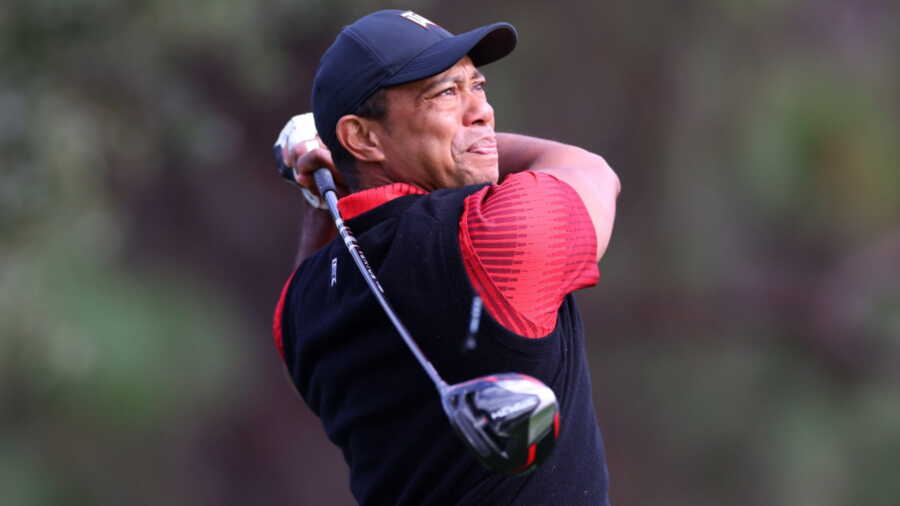
It was telling that, on the eve of his 47th birthday, Tiger Woods was ramping up at a time of year when others were shutting it down.
Woods’ busy December ended Sunday at the PNC Championship, where he and son Charlie, both hampered by lower-leg injuries, tied for eighth in the silly-season event.
December is when the other big names are getting some much-needed R&R before a Kapalua reboot, but not Woods. He was set to play in his own Hero World Challenge before a bout with plantar fasciitis knocked him out of competition and relegated him to hosting duties. Then he played in a 12-hole exhibition in Florida. And then came the 36-hole PNC.
Now, it’s … well … even more time off, to let his right foot heal and to gear up for what he hopes is a schedule that includes the four major championships and, maybe, if everything falls in line, one or two more starts.

And that’s probably an overly optimistic outlook. Woods somehow made the cut in the first two majors of the year, but he also revealed that he underwent unplanned surgeries – plural – at some point during the year. He carefully guards his medical history, but it’s sobering to assume that his number of procedures now greatly exceeds his major wins.
Anyone who watched Woods at the Masters or the PGA or the PNC knows that he is still capable of exemplary golf. There’s little doubt that he can still perform at a high level, even at this age, even after so much mileage and maintenance. But it’s becoming glaringly obvious that his reconfigured leg doesn’t have much left to give, and that must be frustrating as hell: He’s able to pull off any shot required but can’t handle the most basic tenet of tournament golf, which is walking all 72 holes.
The Masters is less than five months away. Woods’ unique challenge is properly preparing without pushing his battered body to the breaking point.

Some more thoughts on the year that was:
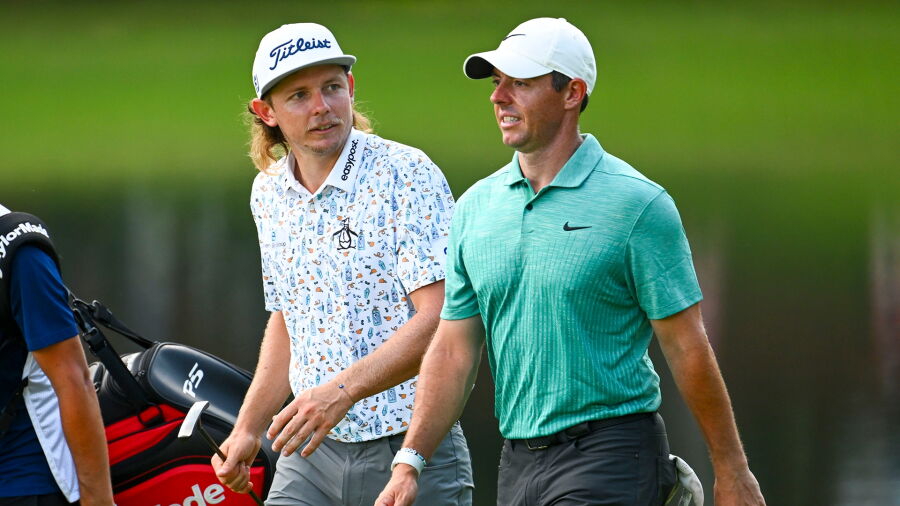
• Last fall, Rory McIlroy cried at the Ryder Cup and said he’d hit one of the lowest points of his career. He felt lost and uncertain about his direction. With that as the backdrop, his accomplishments this year – getting back to world No. 1, winning three times, finishing in the top 8 in every major – were nothing short of remarkable, but they were even more satisfying given his added responsibilities as a de facto spokesman/chief defender for the PGA Tour. McIlroy never suggested that all of the board meetings or commissioner calls were a burden, perhaps because the specter of LIV gave him the spark he’d been missing. With more focus on his legacy than ever before, it can’t be a coincidence that his play improved once LIV’s nascent season got underway. It almost seemed like he fell back in love with the game in 2022 – and that was a welcome sight.
• DJ and Cam Smith saw only slight dips in performance, but it’s startling to see how much the profiles of Brooks Koepka and Bryson DeChambeau were diminished with their moves to LIV. These two guys were THE story a year ago: heavyweights competing for majors who couldn’t hide their disdain for each other. And yet they were complete non-factors this year, both out of the limelight and, except for one week, out of the winner’s circle. It’d be a shame if they’ve already peaked.

• That Nelly Korda-Jin Young Ko rivalry never materialized. Korda was sidelined earlier in the year with a frightening blood-clot episode. Ko’s wrist injury flared up again. Their absences allowed another Ko (the more famous one, Lydia), Minjee Lee and 19-year-old stud Atthaya Thitikul to step up, but Korda is the future of the sport. She’s 24, hits it miles and oozes star potential. If she doesn’t run roughshod over the tour in 2023, it’d be a massive surprise.
• The Athletic tabbed Max Homa as the Player of the Year in golf, and after reading it, it’s hard to disagree. At 32, he’s playing the best golf of his life, but he’s also overflowing with #perspective in what was the most bitterly divided year in golf history. His thoughtfulness makes us smarter as golf observers, a refreshing departure from the usual elite player who doesn’t often let us into their inner sanctum, for fear of appearing vulnerable. It’s impossible not to root for Max.
• In our predictions column for 2022, we posited that Jon Rahm would finish top-3 in every major. That, um, did not work out. He didn’t have a top-10, in fact, a surprising development given his driving prowess and all-around completeness. We’re unlikely to go that far again, but Rahm seems poised for a monster year in 2023. He still won three times worldwide and welcomed another child. With life more settled, he will go on another Rahmpage, or so we think ...
THIS YEAR’S AWARD WINNERS ...

Male Player of the Year: Cameron Smith. For one of the few times in recent memory this is actually a debate, with McIlroy and Scottie Scheffler deserving serious consideration. Ultimately, we chose Smith (at least with our official GWAA vote) not just because of the quantity of his five wins, but the quality. A record-setting performance at the winners-only event at Kapalua. A gutsy finishing kick at The Players. Then an otherworldly back nine to steal the 150th Open. Plus, a LIV win and a homecoming triumph in Australia, as well as a final-group pairing at the Masters. If McIlroy is being praised for summoning spectacular golf despite his dual role as player/spokesman, then Smith at least deserves a tip of the cap for winning twice more after his controversial (and career-altering) decision.

Female Player of the Year: Minjee Lee. Though she didn’t end the year as the world No. 1, Lee ended 2022 as the top performer. She won twice, including her second career major at the U.S. Women’s Open in a record performance. She also had top-five finishes at the Women’s PGA and Women’s Open, claiming the Rolex Annika Major Award for best cumulative major finishes. During a year in which Korda and Ko were sidelined with injuries, and world No. 1 Lydia Ko didn’t add to her major haul, it was Lee who took the biggest step forward.
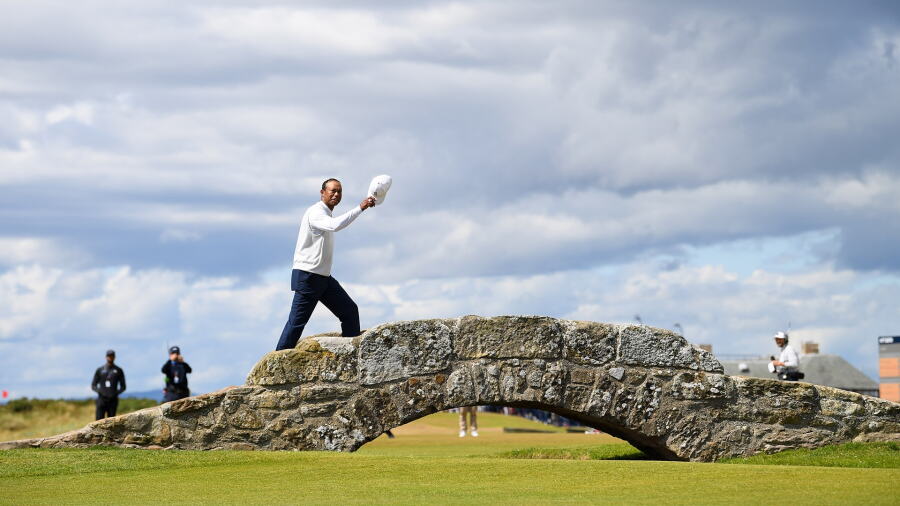
Tournament of the Year: The Open. From start to finish, golf’s oldest major delivered. The week began with a spirited champions’ challenge and some press conference testiness after Greg Norman was banned from the champions’ dinner. Woods said goodbye to the Old Course for what was likely the final time as a competitor. McIlroy sent a jolt into the crowd by sharing the 54-hole lead. And then Smith went berserk on the final nine holes, shooting 30, saving par around the Road Hole Bunker and authoring one of the greatest Sundays in major history – all at the home of golf! Glorious.
Moment of the Year: Tiger Woods, Monday at the Masters. Woods had circled the Old Course for his return, but when he began to make some significant progress in the spring, all of a sudden the Masters didn’t seem like a pipe dream after all. Woods had an on-site test run the week before, but when the patrons finally got a look at him on the Augusta National grounds the Monday before the event – whew, it was an incomparable scene. The adoration and respect was palpable, and it set the tone for what was a week unlike any other in his career, when he was applauded more for his effort than his score.

Breakout Player of the Year, Tier 1: Scottie Scheffler. And to think, on Super Bowl Sunday Scheffler didn’t yet have a Tour win. All he did after the Phoenix Open was win three more times in his next five starts, a run that saw him nab his first major and spend 30 weeks at the top of the world ranking. Scheffler may have surpassed even his own expectations and wildest dreams, but it’s hard to see him falling off – his through-the-bag completeness should keep him in the mix in all of the game’s biggest events.
Breakout Player of the Year, Tier 2: Cameron Young. Yep, at this time a year ago, we were wondering when Scheffler would finally break through. Now it’s Young’s turn, after his macho season in which he did just about everything but hold a trophy after 72 holes. Rookie of the Year. Major contention. Presidents Cup berth. He has made a believer of just about everyone with whom he’s come in contact, and it’s not a matter of when he’ll win – but how many.
Breakout Player of the Year, Tier 3: Seamus Power and Sepp Straka. By the end of the year both 30-somethings had climbed inside the top 30 in the world ranking, opening up a whole new world for 2023 – that could, possibly, involve their first Ryder Cup appearances. Both players are firmly on captain Luke Donald’s radar after combining for two wins and seven other top-5s.
Shot of the Year: Matt Fitzpatrick. After a nervy pull into the fairway bunker on the 72nd hole of the U.S. Open, the scrappy Englishman looked like he might be headed for a playoff. Instead, from 155 yards out, he pulled off the shot of his life: He perfectly nipped his 9-iron from the sand, clearing the lip and then dropping softly about 20 feet behind the flag to set up a trophy-clinching, two-putt par. Fitzpatrick’s playing partner, Will Zalatoris, called it a “1-in-20” shot, and even that seemed generous. The “squeezy fade,” as Fitzpatrick described it, will go down as one of the most clutch shots in major championship history.
Absolute nails. #USOpen pic.twitter.com/2V218Ahvnj
— U.S. Open (USGA) (@usopengolf) June 20, 2022
Biggest Surprise: Tom Kim. The 20-year-old spark plug didn’t have a PGA Tour card as of July, and now he’s crashed the top 15 in the world. Kim set Sedgefield on fire, announcing himself with a Sunday 61 to claim his first Tour title, and then backed it up with a star-making performance for the International Presidents Cup squad and a gritty head-to-head win over stone-cold Patrick Cantlay in Vegas. He’s the first player since Woods to win twice on Tour before the age of 21, but his sample size is still too small to make any grand proclamations about his trajectory. Can’t we just enjoy the ride from one of the game’s most colorful characters?

Most Disappointing: Phil Mickelson. An obvious choice, after he tarnished his legacy and shifted to the forefront of the movement to destroy the Tour. His caustic comments, which became public in February, came off as manipulative, duplicitous and morally bankrupt, and once he finally emerged from his self-imposed exile, he appeared hollow and insincere, his actual golf competitively irrelevant. It’s remarkable to think of all he gave up for Saudi riches: a cushy gig in the TV booth, the Ryder Cup captaincy, a ceremonial starter gig at the Masters. You can’t help but wonder, in his quiet moments, if he thinks it was all worth it.