



Reaction from across the golf world to the PGA Tour’s preemptive pathway strike was predictably nuanced.
Depending on which side of professional golf’s divide you reside, the Tour’s move to create a new policy to welcome back LIV Golf’s biggest names, all the way down to the remarkable details, was either a welcome breakthrough or a reason to worry.
But it was the take of the one person who truly resides between these two worlds, that was as layered as it was inspired.
Hudson Swafford, the affable father of three and three-time Tour winner, watched from Miami Beach, Florida, where he was on a work trip, as Monday’s events unfolded.
The Tour, in a sweeping announcement, unveiled a new policy — the Returning Member Program — that paves the way for Brooks Koepka’s return from LIV Golf. The policy also opens the door for LIV players who have won a major or The Players Championship since 2022 – essentially an á la carte offering for Koepka, Jon Rahm, Bryson DeChambeau and Cam Smith to immediately come back to the Tour.
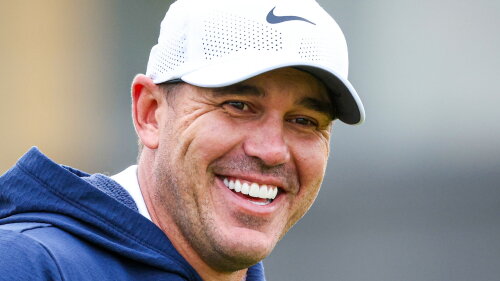
The new policy is a powerful punch from the Tour. It appeases the many of circuit’s membership with a hefty pound of flesh (Koepka and any other LIV player who returns won’t be eligible for equity in the Tour for five years, which could be worth as much as $63 million) all while stopping short of making any potential punishments too onerous.
“At the end of the day, I think it’s great they are figuring out a pathway and bringing some guys back slowly,” Swafford said. “They can feel out the Tour side and the player reactions. Golf’s not big enough to be separated.”
Swafford’s take is worth considering because, before Koepka decided he wanted back into the Tour fold and the circuit’s CEO Brian Rolapp offered his inspired option, the former University of Georgia star tested the waters.
Swafford was among the first Tour players to defy the circuit’s regulations and play a LIV event. He also was one of the players who challenged those regulations in court. So when he was relegated off the Saudi-funded league in 2024 because of injury and poor play, his path back to the Tour was not nearly as tidy as Koepka’s is now.
Essentially, Swafford, who reapplied for membership last year, was told he wouldn’t be eligible to play a Tour-sanctioned event — which includes Q-School and Korn Ferry Tour events — until 2027 based on his time at LIV, which included five starts before the 2022 FedExCup playoffs.
“Brooks came in one week later,” Swafford pointed out before quickly adding, “It is what it is. I made my own decision based on all the facts I had. I got injured, started playing terrible golf, life isn’t fair all the time.”
If anyone has reason to feel a certain kind of way about the Tour’s decision to so quickly welcome back Koepka, as well as the other three potential stars from LIV Golf, it’s Swafford. But taking the view from 30,000 feet is a much more refreshing way to tackle a wildly complex issue.
“I’ve had my angry moments, but I wasn’t surprised by this,” Swafford said. “That’s a big win for the Tour.”
Swafford hasn’t given up on his dream to play on the Tour again and he hopes this crack in the door will create a better scenario for every player, not just himself, who tested the LIV waters.
He’s also comfortable with the notion that while Monday’s move by the Tour is narrowly fixed on LIV Golf’s best players, it’s not a testament to his own plight or his potential path back.
“What can I do? I can’t do anything to the Tour, and I can’t sulk over it,” he said. “I don’t know if I want to pursue it again full time, but that’s me speaking now. Who knows down the road?”
The notion of “who knows” is the most important element that came from Monday’s seismic shift in professional golf. What seemed impossible just a week ago is now the new norm, and who knows what will be normal in another week.